ZINNIA LABS / KNOWLEDGE BASE

Notes.
Models.
Arguments that survive contact.

A working knowledge base for technical arguments, architecture notes, mathematical models, research fragments, and longer-form essays.

Notes.
Models.
Arguments that survive contact.

A working knowledge base for technical arguments, architecture notes, mathematical models, research fragments, and longer-form essays.


01 / AI SYSTEMS

Taxonomy, architecture,
and deployment fallacies.


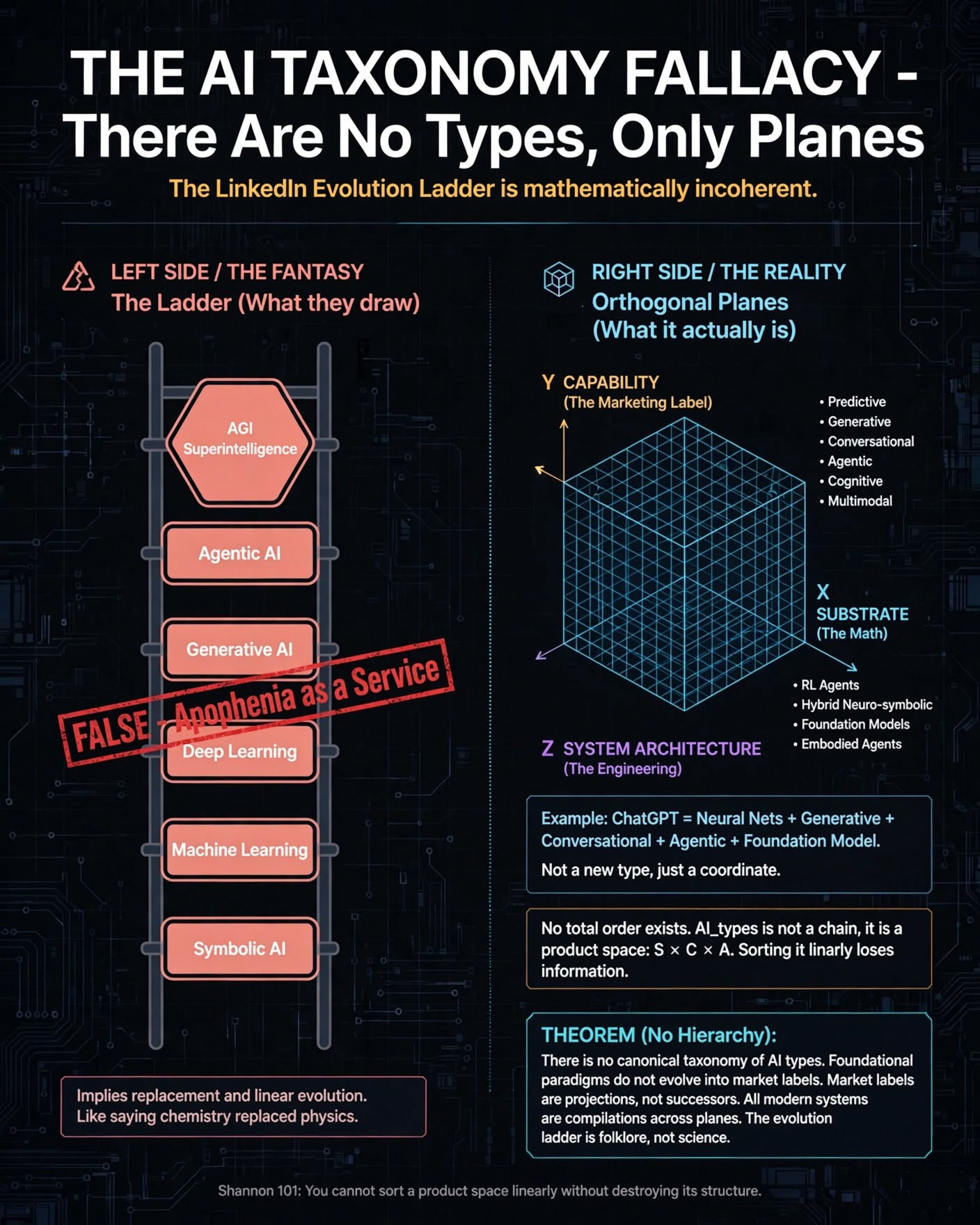
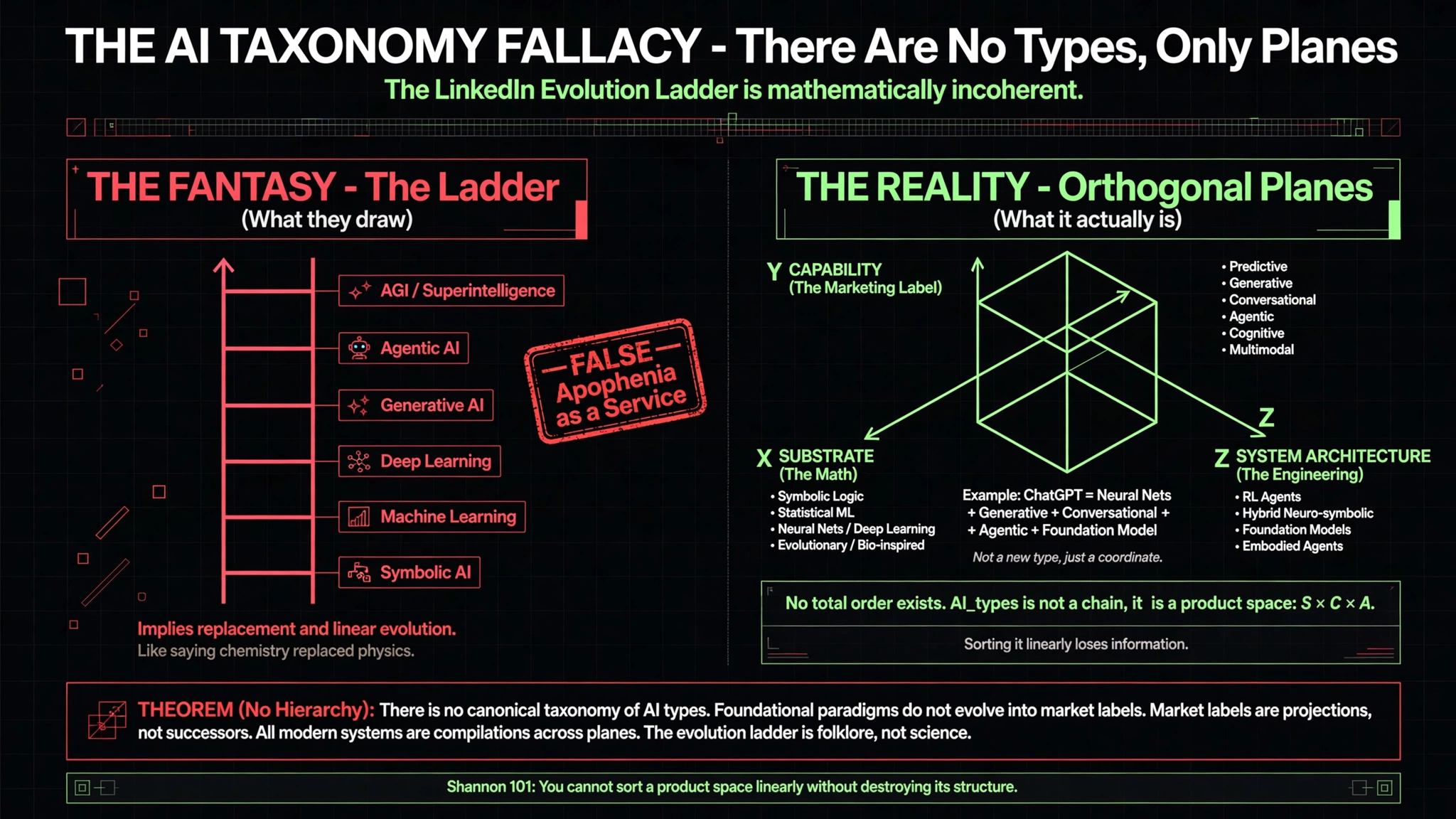
AI Taxonomy Fallacy poster
SEPTEMBER 2015 / AI SYSTEMS

The Statigraphy of Intelligence

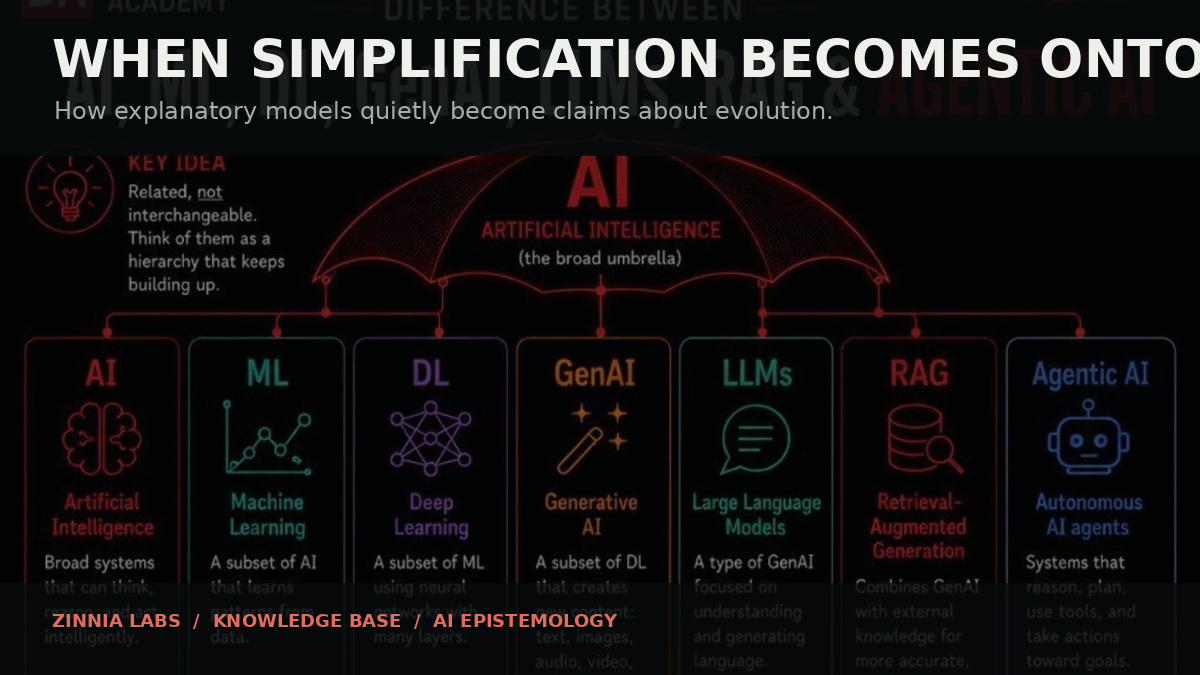
The common graphic implies: AI ⊃ ML ⊃ DL → GenAI → RAG → Agents, as if they were the same type.

They are not.

AI is the research program (Dartmouth, 1956). ML / DL / GenAI are method families within it.

RAG and Agents are not types of AI — they are architectural patterns:

Retriever (1940s: file cabinets, Hollerith cards) + Generator (2017) + Controller.

Informatics vs File Cabinets vs Typewriters vs Email.

You can't leave out the file cabinet — the vector DB is the file cabinet.

A real system is not a step on a ladder. It is a coordinate in S × C × A.

Read note


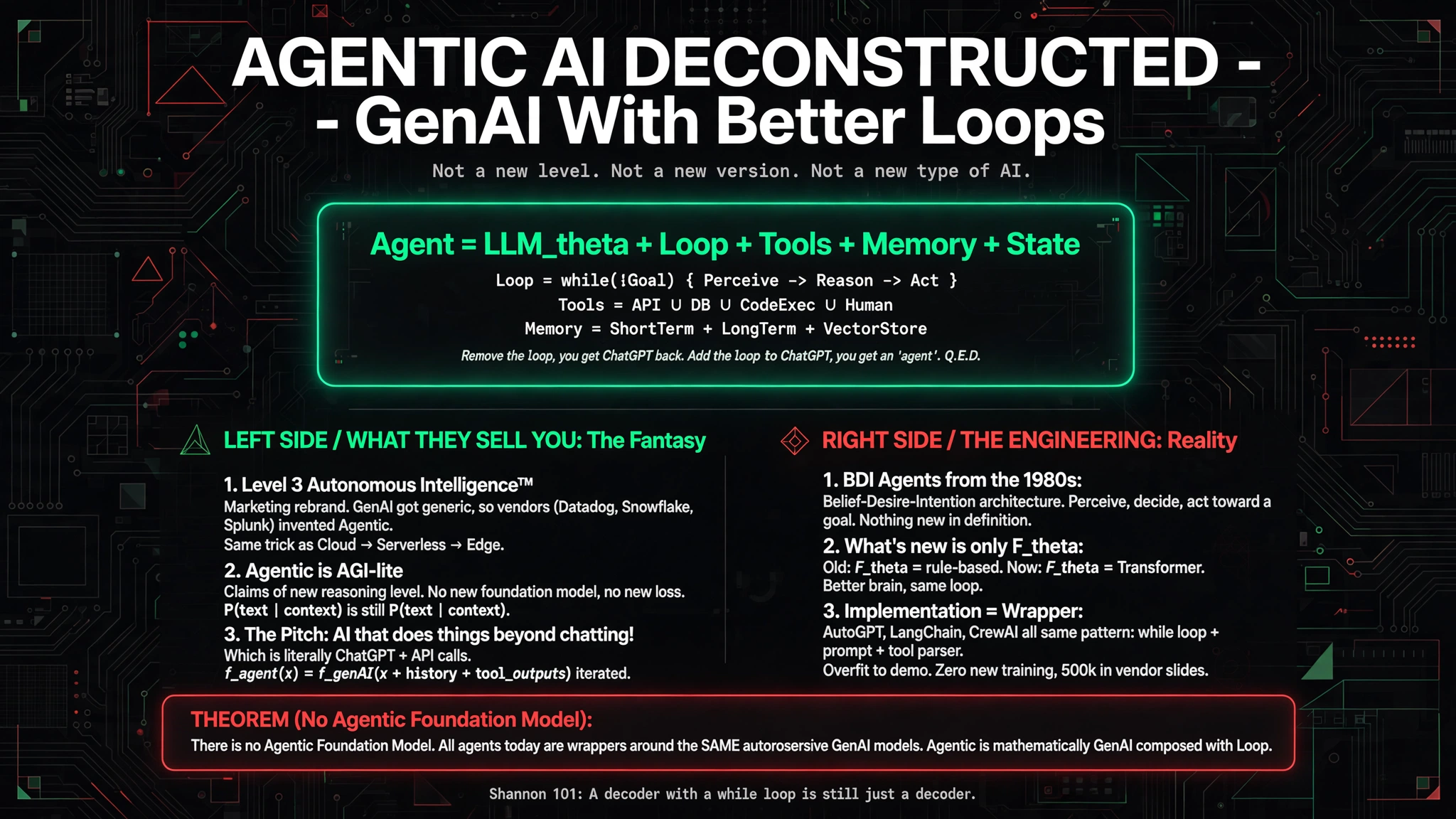
Generative AI and Agentic AI diagram

AUGUST 2015 / AI SYSTEMS

The GenAI Evolution Fallacy

“Agentic is the new” collapses under engineering inspection. The agent is a wrapper around the model, not a new foundation-model class.

$$Agent = LLM_\theta + Loop + Tools + Memory + State$$

The engineering pattern is still perceive → reason → act inside a control loop.

Read note


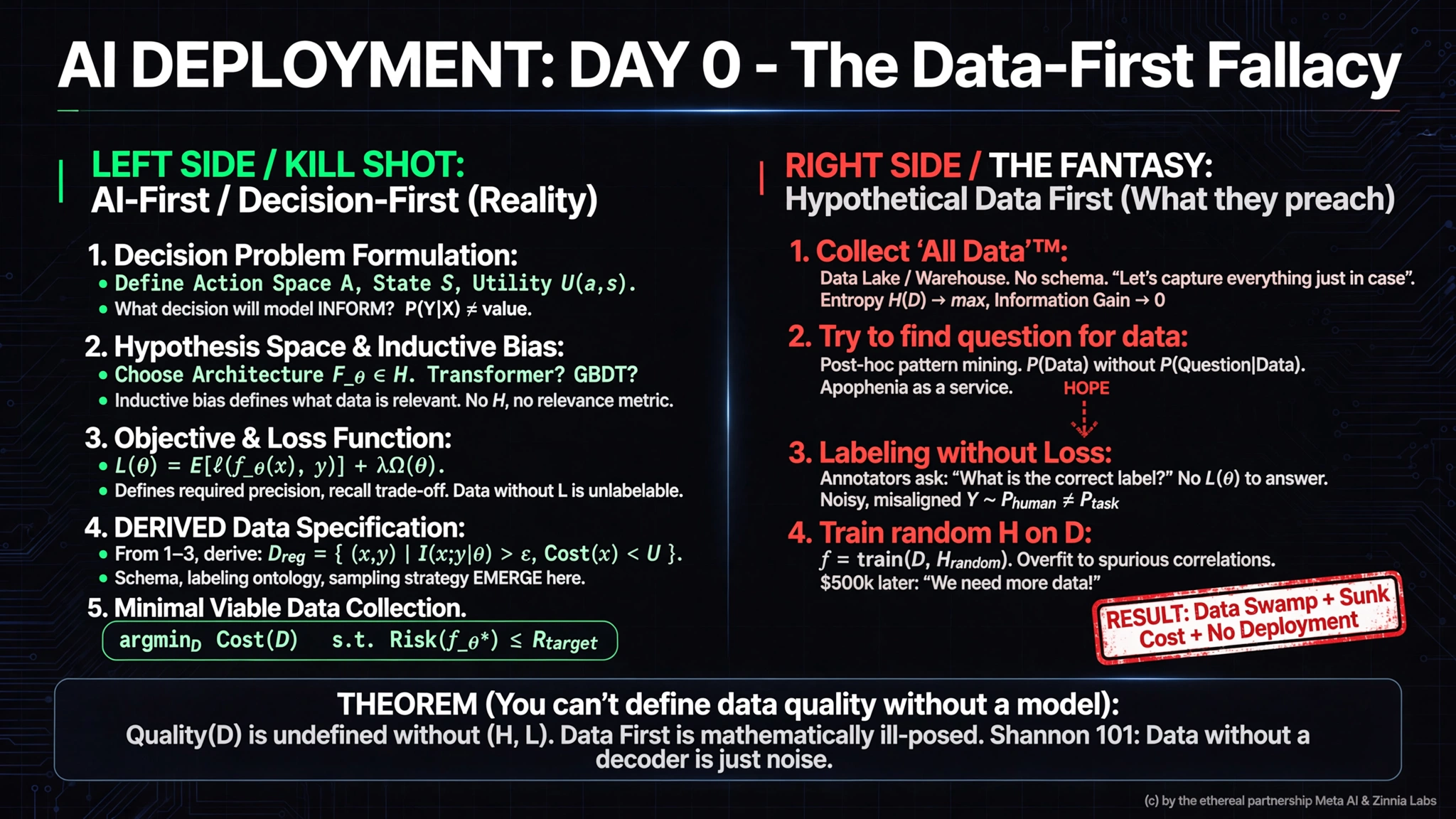
AI deployment infographic

AUGUST 2015 / AI SYSTEMS

The Data-First Fallacy

Data quality cannot be defined independently of the hypothesis, architecture, and loss function. Data is a derived constraint from the decision problem, not automatically the starting point.

$$D_{\text{req}} = \{(x,y) \mid I(x;y \mid \theta) > \epsilon\}$$
Read note


02 / COGNITION

Concepts that need
clean definitions.

REFERENCE / COGNITION

Conscience

An inner cognitive or emotional sense that distinguishes right from wrong, guiding moral conduct and prompting remorse or satisfaction relative to an individual value system.

Read more


REFERENCE / COGNITION

Cognitive

Mental processes involved in gaining knowledge and comprehension: thinking, knowing, remembering, judging, perception, language, and problem-solving.

Read more


REFERENCE / COGNITION

Concept

Cognitive consciousness concerns the processing, interpretation, and use of information through mechanisms such as attention, memory, and executive function, with or without subjective awareness.

Read more


03 / CONTINUE

Explore the rest
of the lab.